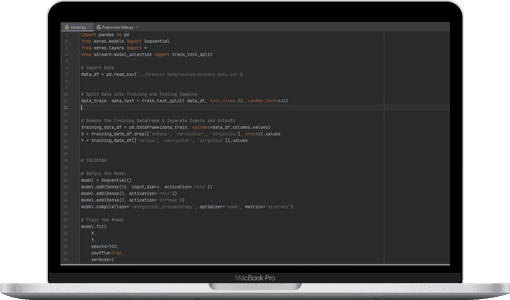
Neural Network Iris Test
This project was my first hands-on experience building a neural network from scratch using the Keras library in Python. The goal was to classify the well-known Iris dataset, which is commonly used for testing machine learning algorithms.
Why I Built It
In school, I primarily worked with tools like Orange Data Mining to apply machine learning models on sample datasets. However, I wanted to deepen my understanding by working directly with a machine learning library and building my own models. This project gave me the opportunity to do that, starting with one of the most common datasets in the field—the Iris dataset.
Key Features
- Keras Neural Network: I built a simple neural network model using Keras, which is known for its ease of use and integration with TensorFlow. The model classifies the Iris dataset into one of three species (Setosa, Versicolor, and Virginica).
- Training and Testing: The project includes scripts for training the neural network and evaluating its accuracy on the test set. I experimented with different parameters like the number of layers, activation functions, and optimizers to find the most effective model.
- From Scratch: In addition to using Keras, I’ve also worked on building neural networks from scratch as a learning exercise, allowing me to better understand the inner workings of these models.
The Iris Dataset
The Iris dataset is a classic dataset in machine learning, containing 150 records of iris flowers, each with four features: sepal length, sepal width, petal length, and petal width. The dataset is often used to test classification models because of its simplicity and small size. The task is to classify the iris species based on these features.
Tech Stack
- Python: The entire project was implemented in Python, leveraging its powerful libraries for machine learning and data analysis.
- Keras: I used Keras for building the neural network, taking advantage of its high-level API for fast experimentation.
What I Learned
This project was a fantastic introduction to working with neural networks beyond the classroom setting. It helped me understand the practical steps involved in building, training, and optimizing machine learning models. I also gained a deeper understanding of how to fine-tune model parameters for better performance.
Feel free to explore the GitHub repository to dive deeper into the code!