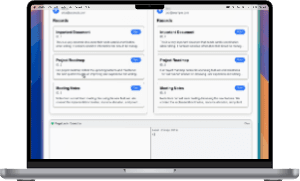
Page Lock - React Ownership Management Library
Page Lock is a React library I built to solve a common problem in collaborative web applications: preventing multiple users from editing the same content simultaneously. It provides elegant, real-time page ownership management with built-in UI components and hooks.
The Problem
In collaborative applications, when multiple users try to edit the same record or page simultaneously, you get:
- Data conflicts - Last save wins, losing other users' work
- User confusion - People don't know someone else is editing
- Wasted effort - Duplicate work that gets overwritten
Traditional solutions are either too complex or don't provide good UX.
The Solution
Page Lock provides a simple, elegant solution with:
🔐 Real-time ownership tracking - Know who's editing what, when
🔄 Automatic ownership transfer - Seamless handoffs between users
🎨 Beautiful UI components - Ready-to-use badges and modals
📱 Mobile-friendly design - Works great on all devices
🎯 TypeScript support - Full type safety out of the box
🚀 Framework agnostic - Works with Next.js, Create React App, etc.
Live Demo
PageLock Demo
Records
Important Document
ID: 1
Project Roadmap
ID: 2
Meeting Notes
ID: 3
Records
Important Document
ID: 1
Project Roadmap
ID: 2
Meeting Notes
ID: 3
Key Features
🔒 Flexible Locking Strategies
// Lock entire pages
const { lockPage, unlockPage } = usePageOwnership({
  pageId: 'user-profile-123'
});

// Lock specific components
<OwnershipModal pageId="document-editor-456" />

// Just show ownership status
<OwnerBadge pageId="settings-panel-789" />
🌐 Multiple Storage Adapters
// Use localStorage for simple cases
const adapter = createLocalStorageAdapter({
  prefix: 'my-app'
});

// Use your API for production
const adapter = createApiStorageAdapter({
  getAllOwners: () => fetch('/api/owners').then(r => r.json()),
  lockPage: (pageId, userId, userName) =>
    fetch('/api/lock', { method: 'POST', body: JSON.stringify({pageId, userId, userName}) }),
  unlockPage: (pageId, userId) =>
    fetch('/api/unlock', { method: 'POST', body: JSON.stringify({pageId, userId}) }),
  takePageOwnership: (pageId, userId, userName) =>
    fetch('/api/take-ownership', { method: 'POST', body: JSON.stringify({pageId, userId, userName}) })
});
⚡ Real-time Updates
The library polls for ownership changes at configurable intervals (default 3 seconds), ensuring all users see locks and releases immediately. No websockets required!
Technical Architecture
Core Components
| Component | Purpose | Use Case |
|---|---|---|
OwnershipProvider | Context provider for ownership state | Wrap your app or specific sections |
usePageOwnership | Hook for programmatic control | Custom implementations |
OwnerBadge | Simple ownership indicator | Show who owns what |
OwnershipModal | Full ownership management UI | Complete lock/unlock flow |
Type Safety
interface PageOwner {
  user_id: string;
  user_name: string;
  page_id: string;
  timestamp: number;
}

interface OwnershipConfig {
  userAdapter: UserAdapter;
  ownershipAdapter: OwnershipAdapter;
  options?: {
    pollingInterval?: number;
  };
}
Real-World Use Cases
1. CRM Record Editing
Prevent sales reps from simultaneously editing the same customer record, avoiding data loss and confusion.
2. Document Collaboration
Lock document sections while users are editing, similar to Google Docs but for React applications.
3. Configuration Management
Ensure only one admin can modify system settings at a time, preventing conflicting changes.
4. Form Workflows
Lock multi-step forms to prevent multiple submissions or conflicting edits during long workflows.
Installation & Quick Start
npm install @joecarot/page-lock
# or
yarn add @joecarot/page-lock
Basic Implementation
import {
  OwnershipProvider,
  createLocalStorageAdapter,
  OwnerBadge
} from '@joecarot/page-lock';

// Setup adapters
const userAdapter = {
  getCurrentUser: () => Promise.resolve({
    id: 'user-123',
    email: 'user@example.com',
    name: 'John Doe'
  })
};

const ownershipAdapter = createLocalStorageAdapter({
  prefix: 'my-app'
});

const config = {
  userAdapter,
  ownershipAdapter,
  options: {
    pollingInterval: 3000
  }
};

// Use in your app
function App() {
  return (
    <OwnershipProvider config={config}>
      <div>
        <h1>User Profile</h1>
        <OwnerBadge pageId="user-profile-123" />
        {/* Your form content */}
      </div>
    </OwnershipProvider>
  );
}
Development Process
Built with Modern Tools
- TypeScript for type safety and better DX
- Jest for comprehensive testing
- GitHub Actions for CI/CD
- tsup for efficient bundling
- Tailwind CSS for styling
Testing Strategy
# Run tests
npm test

# Coverage report
npm run coverage

# Run example
cd example && npm start
The library includes extensive unit tests covering:
- Ownership state management
- Real-time polling behavior
- Error handling scenarios
- Component rendering states
Performance Considerations
Optimized Polling
- Smart intervals: Only polls when components are mounted
- Efficient updates: Uses React's built-in state management
- Memory cleanup: Automatic cleanup on unmount
Bundle Size
The library is designed to be lightweight:
- Tree-shakeable exports
- Minimal dependencies
- Efficient TypeScript compilation
Future Enhancements
Planned Features
🔄 WebSocket Support - Real-time updates without polling
🎭 Role-based Permissions - Different lock types for different user roles
🔌 More Adapters - Redis, PostgreSQL, MongoDB adapters
📊 Analytics - Usage tracking and ownership metrics
🎨 Theme Customization - More styling options
Contributing
The project is open source and welcomes contributions! Check out the GitHub repository for:
- 📋 Issue tracking
- 🔄 Pull request guidelines
- 📖 Development setup
- 🧪 Testing instructions
Lessons Learned
Building this library taught me about:
API Design
Creating intuitive APIs that are both simple for basic use cases and flexible for complex scenarios.
State Management
Handling real-time state synchronization across multiple components and user sessions.
Library Distribution
Packaging, versioning, and distributing a TypeScript library with proper type definitions.
User Experience
Balancing functionality with simplicity - making complex ownership logic feel natural.
Page Lock solves a real problem that many collaborative applications face. By providing simple, elegant ownership management, it helps teams build better collaborative experiences without the complexity of traditional solutions.
Try it out in your next project - I'd love to hear how it works for you!